

How To Improve Mobility If You Sit Too Much: A Practical Plan to Feel Less Stiff and Move Better Every Day
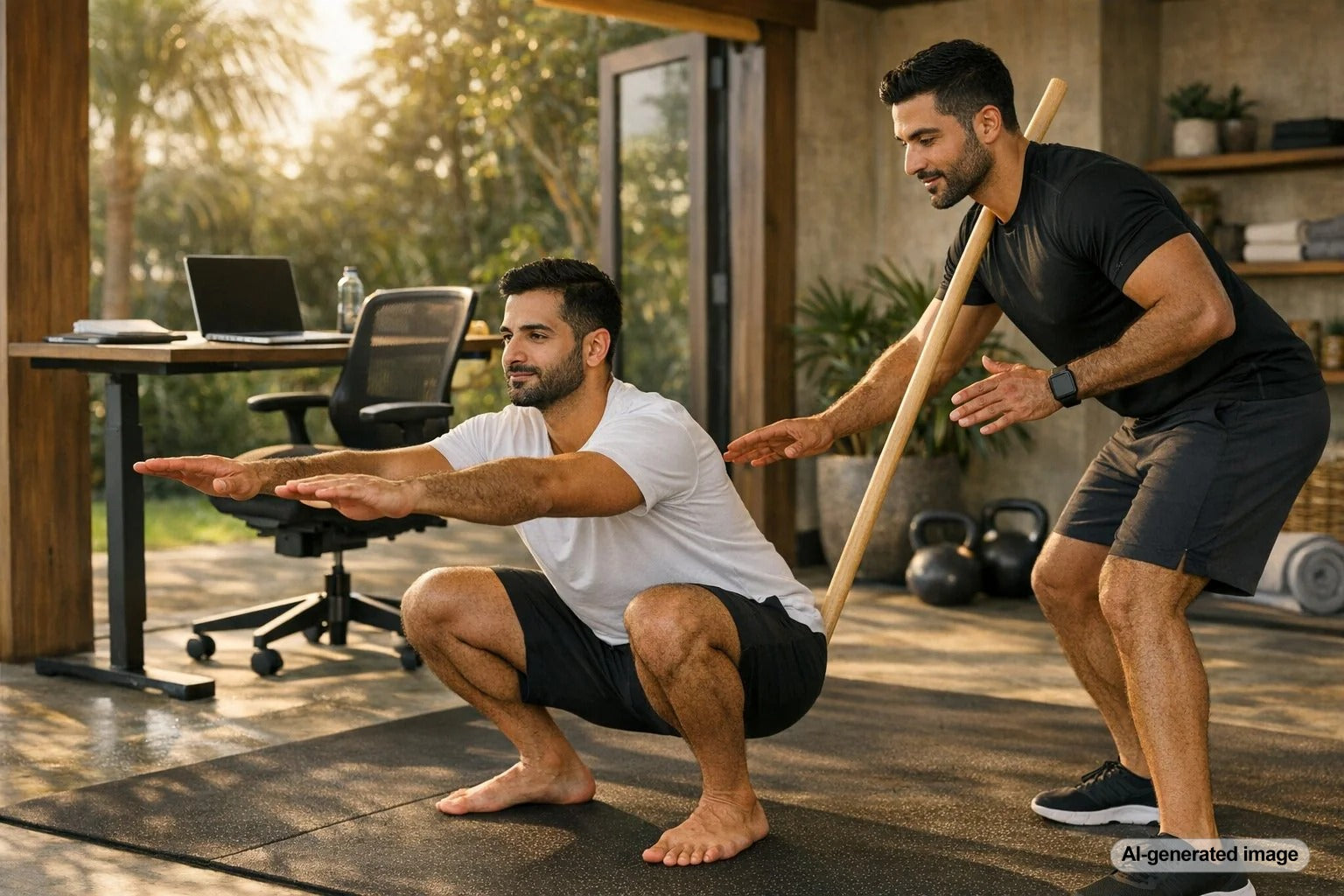
Before anything else, if you sit for most of the day, you do not need a heroic mobility routine or a complicated recovery system. You need a smarter plan that restores movement where sitting tends to lock things up, strengthens the muscles that stop you from falling right back into stiffness, and fits into real life. For many adults, that means doing less random stretching, moving more often during the day, and building enough strength to keep better positions available instead of borrowing them for five minutes at a time.
That is also why mobility work has to be practical. If your hips feel tight when you stand up, your upper back feels stuck, your shoulders round forward by the afternoon, or your ankles feel stiff when you squat or go down stairs, sitting may be part of the picture. But the answer is usually not to attack every joint at once. The better move is to focus on the areas that most often lose motion from desk-heavy days: hips, thoracic spine, shoulders, and ankles. If you want a more personalized path built around your schedule, equipment, and limitations, online coaching can help you stop guessing and start using a plan that actually fits your life.
Improve mobility after too much sitting by combining three things: frequent movement breaks during the day, a short mobility routine that targets hips, upper back, and ankles, and strength training that teaches your body to keep the range of motion you gain. Stretching matters, but mobility improves faster when you pair it with control and consistency.
Why sitting creates stiffness in the first place
Long periods in the same position can make certain areas feel sticky, compressed, or hard to access. A common pattern is tight-feeling hip flexors, underused glutes, a rounded upper back, and a neck that spends too much time forward. Another is limited ankle motion, especially in adults who also spend most of the day in supportive shoes, rarely squat deeply, and move mostly in straight lines.
The important distinction here is that feeling tight does not always mean a muscle is literally short. Sometimes it means you have been in one position too long. Sometimes it means you do not have enough strength or control in the range you are trying to use. That is one reason busy adults often stretch aggressively, feel better for an hour, and then end up right back where they started. The body usually keeps the motion it can control.
The four areas that usually need the most attention
1. Hips
If you sit a lot, your hips often feel restricted when you stand, walk, lunge, or try to train lower body movements well. Focus on hip flexor mobility, glute activation, and some form of hip rotation work. A half-kneeling hip flexor stretch, glute bridge, and controlled 90-90 hip switches can be a strong start.
2. Thoracic spine
Your upper back needs to rotate and extend well if you want better posture, smoother overhead movement, and less compensation through the neck and lower back. This matters even more if you play golf or tennis, where rotation is part of the sport. Open-book rotations, wall slides, and bench-supported thoracic extensions are useful options.
3. Shoulders
Shoulder stiffness is often tied to what is happening below and behind it. If your rib cage and upper back barely move, your shoulders tend to do the extra work. That is why shoulder mobility usually improves faster when you combine upper-back movement with light pulling, controlled reaching, and better scapular motion.
4. Ankles
Ankles get overlooked all the time. But if they are stiff, your squat, split squat, walking mechanics, and even balance can get worse. Calf mobility, tibialis raises, and knee-over-toe ankle rocks can help many adults move more smoothly.
A simple mobility routine that works for busy adults
You do not need 45 minutes. Most adults do better with 8 to 12 focused minutes done consistently than a long session they avoid all week. A simple routine could look like this:
- 1 minute of walking or marching to break the sitting pattern
- 30 to 45 seconds per side of a hip flexor stretch
- 8 to 10 glute bridges
- 6 to 8 thoracic rotations per side
- 8 wall slides
- 8 to 10 ankle rocks per side
- 1 or 2 sets of goblet squats, bodyweight squats, or split squats with control
The last step matters. Finishing with a controlled strength-based movement gives your body a chance to use the range you just opened up. That is often the difference between mobility work that feels nice and mobility work that carries over into your day.
What people often get wrong
- Only stretching the area that feels tight without looking at nearby joints or movement patterns
- Doing mobility work once or twice a week and expecting it to offset ten-hour sitting days
- Skipping strength work that helps keep new range of motion
- Pushing into painful positions instead of using controlled, tolerable movement
- Assuming more exercises means better results when consistency is the real driver
There is also a big difference between beginners, returners, and experienced exercisers. Beginners often need fewer drills and more repetition. Adults getting back into training usually need mobility work that respects old injuries, deconditioned tissues, and lower recovery capacity. More experienced adults may need less stretching than they think and more targeted control around specific restrictions that show up in their lifts, swings, or court movement.
How to fit mobility into a real schedule
If your calendar is packed, stop treating mobility like a separate hobby. Put it in the cracks of your day. Do two minutes between meetings. Stand up and walk after long blocks of computer work. Pair a short mobility sequence with the start of your strength session. Use travel days as a reason to keep the routine simpler, not to skip it completely.
For many professionals, the best setup is this: micro-breaks during the day, a short pre-workout mobility block three to five times per week, and regular strength training that covers squats, hinges, pushes, pulls, carries, and rotation where appropriate. That kind of structure supports movement quality far better than random stretching on bad days.
When your plan needs to be more personalized
If you have persistent pain, recurring flare-ups, major asymmetries, or old injuries that keep changing what you can do, a generic mobility checklist may not be enough. That does not mean you are broken. It usually means your exercise choices, volume, recovery, and movement progressions need more thought. For adults who want a premium, individualized approach, apply for coaching if you want support built around your body, training history, and long-term goals.
That kind of personalization can be especially useful for adults over 40, frequent travelers, golfers, tennis players, or anyone trying to balance performance, body composition, and longevity without beating themselves up in the process. You can also learn more about Jordan Cromeens if you want a clearer sense of the coaching approach behind Renovate My Body.
If you sit too much, better mobility usually comes from doing the basics well and doing them often. Move more during the day, target the joints that tend to stiffen up, and reinforce that range with strength work you can recover from consistently. The goal is not to feel loose for a few minutes. The goal is to move better in a way that holds up in workouts, workdays, travel, and everyday life.
This content is for educational purposes only and is not intended to replace medical advice, diagnosis, or treatment. If you are dealing with an injury, pain, or a health concern, consult a qualified healthcare professional before changing your exercise or nutrition routine.