

How To Start Working Out Safely With Knee Pain And Finally Build Strength Without Making It Worse
One of the most useful things to know is that knee pain does not automatically mean you should stop working out. In many cases, the real issue is not movement itself, but how you are moving, what you are loading, and how quickly you are progressing. When you approach training with a smarter structure, it becomes possible to build strength, improve stability, and move with more confidence without constantly aggravating your knees.
If you have been hesitant to get started or worried about making things worse, you are not alone. Many adults returning to fitness, especially those over 40 or dealing with old injuries, run into the same challenge: they want to train, but their knees push back. The solution is not avoiding exercise entirely. It is learning how to train in a way that respects your current limitations while still moving forward.
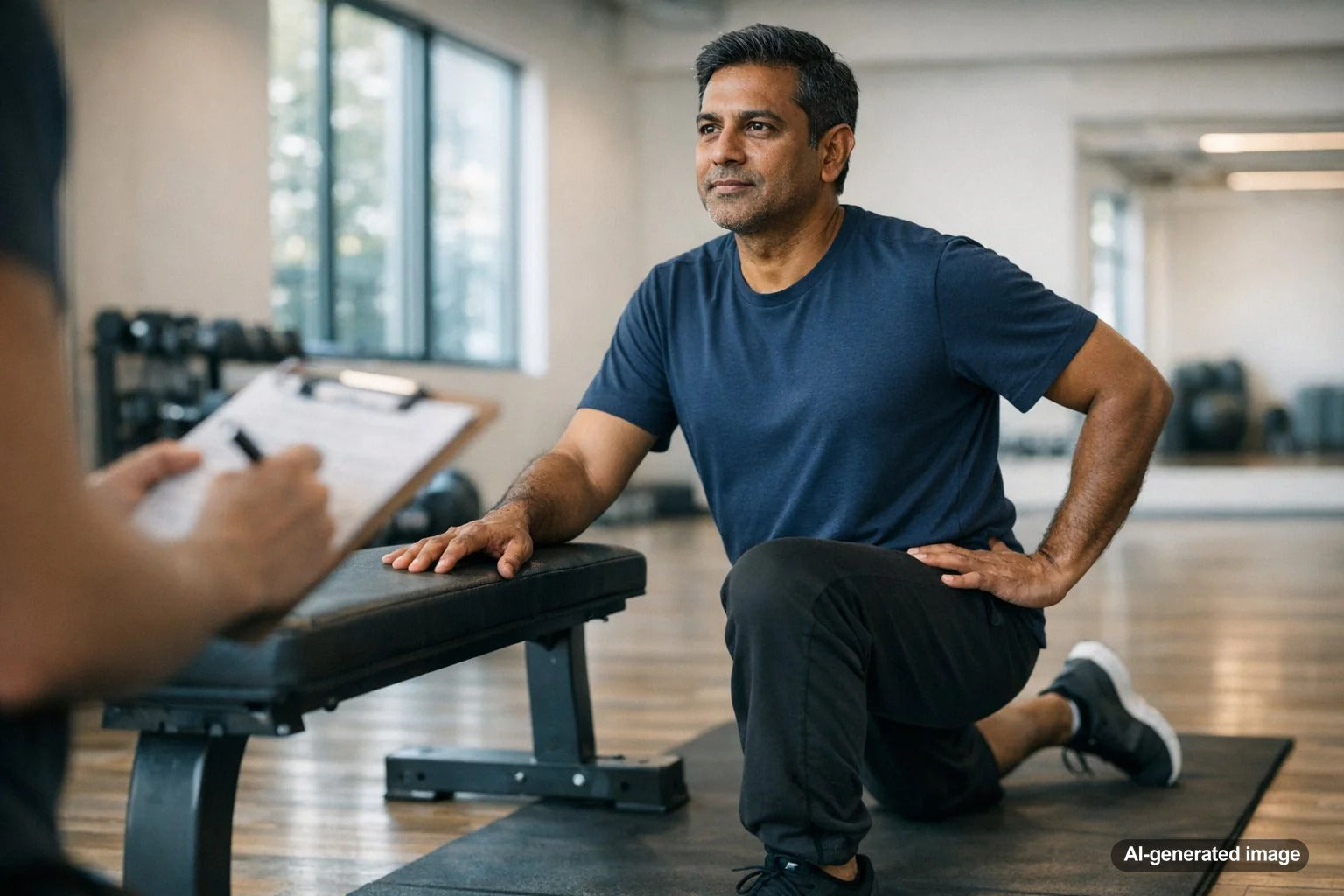
Start By Changing How You Think About Knee Pain
A common mistake is assuming that pain means damage or that every uncomfortable movement is harmful. In reality, knee discomfort can often come from poor movement patterns, lack of strength in surrounding muscles, or doing too much too soon.
Instead of asking, "Should I stop?", a better question is, "How can I adjust this so it works for me?" This shift opens the door to progress instead of avoidance.
You can usually keep training with knee pain by modifying exercises, reducing load, improving control, and strengthening surrounding muscles like the hips and hamstrings.
Focus On Movements That Respect Your Current Range
One of the biggest differences between people who improve and those who stay stuck is how they handle range of motion. Forcing deep squats or lunges when your knees are not ready often leads to flare-ups.
Instead, start with movements that feel controlled and manageable:
- Partial squats to a box or bench
- Step-ups onto a low platform
- Split squats with a shorter range
- Controlled leg presses within a comfortable depth
Over time, as strength and control improve, your usable range often expands naturally.
Build Strength Where Your Knees Need Support
The knee does not work in isolation. It is heavily influenced by what your hips and ankles are doing. Weakness or poor control in these areas often leads to extra stress on the knee joint.
Two commonly overlooked areas:
- Glutes: Help control knee alignment and reduce inward collapse
- Hamstrings: Support joint stability and balance out quad dominance
Adding exercises like hip bridges, Romanian deadlifts, and lateral band work can make a noticeable difference in how your knees feel during workouts.
Control Tempo Instead Of Chasing Intensity
Many people jump straight into higher reps, faster movements, or heavier weights because that is what they think "working out" should feel like. When you are dealing with knee discomfort, control matters more than intensity.
Slowing down your reps can immediately improve how an exercise feels:
- Lower slowly for 2-3 seconds
- Pause briefly at the bottom
- Stand up with control, not momentum
This approach reduces joint stress while increasing muscular engagement, which is exactly what you want when rebuilding confidence in your knees.
Adjust Frequency Based On Real Life, Not Ideal Plans
Busy professionals often fall into an all-or-nothing cycle. They either try to train hard five days a week or stop completely when something hurts. Neither approach works well when managing knee pain.
A more realistic starting point might look like:
- 2-3 strength sessions per week
- Low-impact cardio like walking or cycling
- Short mobility sessions on off days
This structure allows progress without overwhelming your recovery capacity, which tends to be lower when joints are irritated or when life stress is high.
Common Mistakes That Keep Knees From Improving
- Jumping back into old workouts without adjusting for current limitations
- Ignoring pain signals until they become more persistent
- Only focusing on the knee instead of surrounding muscles
- Rushing progress instead of building gradually
- Doing random exercises without a structured plan
What People Often Miss When Training With Knee Pain
There are a few patterns that show up repeatedly with adults trying to get back into shape:
1. Old injuries change how you move
If you have had previous knee issues, even years ago, your body may have adapted in subtle ways. That can affect how you squat, step, or shift your weight.
2. Mobility limitations upstream matter
Limited ankle mobility or stiff hips often force the knee to compensate. Addressing these areas can reduce unnecessary strain.
3. Fatigue changes mechanics
Exercises that feel fine early in a workout may become uncomfortable later as fatigue sets in. This is why exercise selection and volume both matter.
When A More Structured Plan Makes A Difference
If you have been trying to piece things together on your own and keep running into setbacks, it may be time to take a more structured approach. For people who want more clarity around what to do, how to progress, and how to adjust based on their body, working with a coach can help remove a lot of guesswork.
For those looking for guidance built around their schedule, goals, and limitations, online coaching can provide a more personalized path forward without needing to figure everything out alone.
You can also learn more about the approach behind Renovate My Body, which focuses on helping adults train intelligently for long-term capability, not short-term extremes.
How To Know You Are On The Right Track
Progress with knee pain does not usually look dramatic at first. Instead, it tends to show up in small but meaningful ways:
- Exercises feel more controlled
- Discomfort becomes more predictable instead of random
- Recovery between sessions improves
- You feel more confident moving instead of hesitant
These are signs that your approach is working, even if everything is not perfect yet.
You do not need to avoid training because of knee pain, but you do need to train differently. When you prioritize control, smart exercise selection, and gradual progression, it becomes possible to build strength and move better without constantly aggravating your knees.