

The Difference Between Discipline and Self-Punishment in Fitness (And Why Most Adults Get It Wrong)
It helps to know what actually works when it comes to staying consistent with fitness, especially as life gets busier and your body becomes less forgiving. The difference between discipline and self-punishment is one of the most misunderstood parts of training, and it quietly determines whether someone builds lasting progress or burns out. Many adults think they need to push harder, restrict more, and "be tougher" to get results, when in reality, that mindset often works against them.
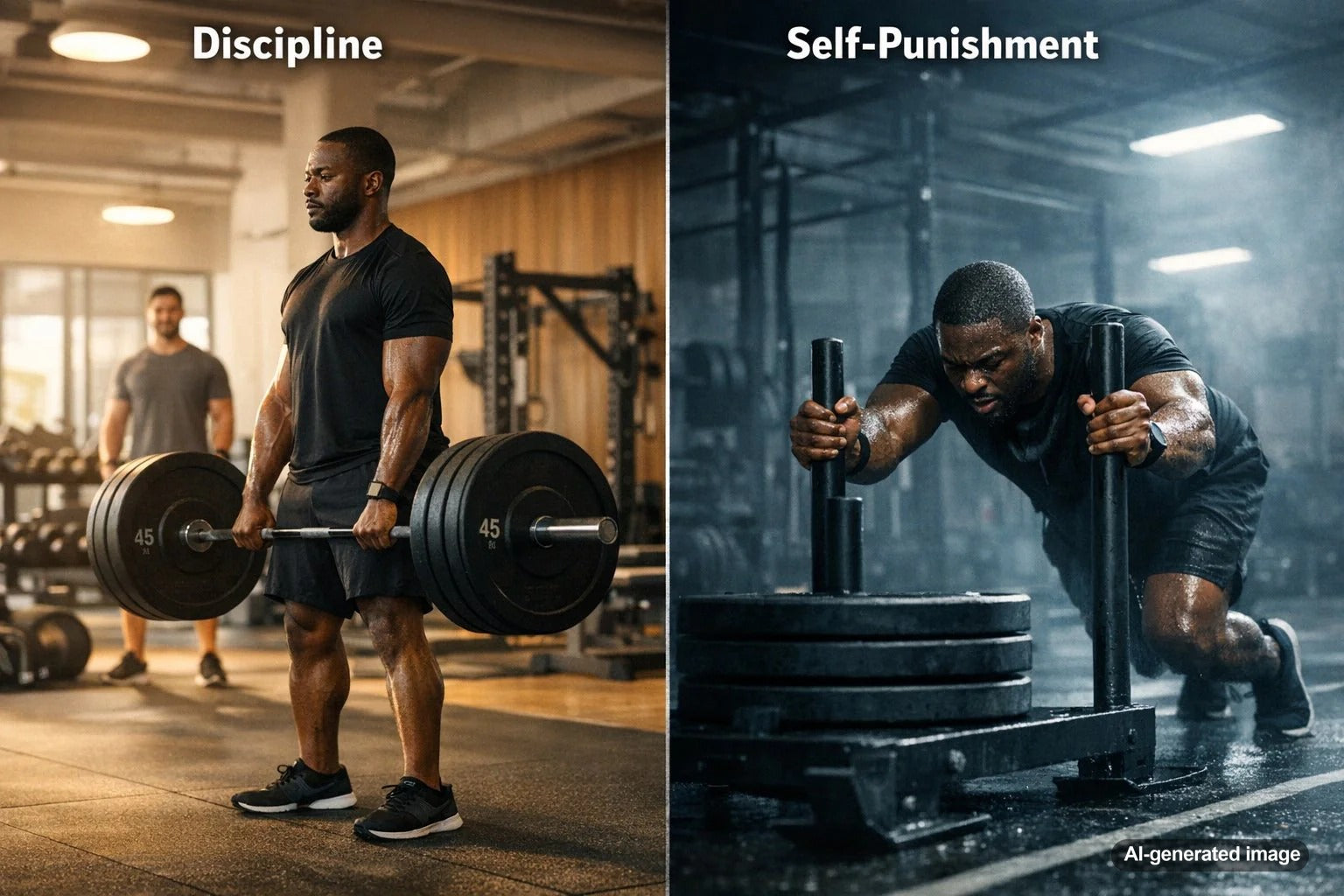
Discipline Builds You. Self-Punishment Breaks You Down.
At a surface level, both discipline and self-punishment can look similar. You show up, you push through discomfort, and you stick to a plan. But the intention and long-term effect are completely different.
Discipline is about consistency, structure, and making decisions that support your long-term capability. It is calm, repeatable, and sustainable.
Self-punishment is driven by guilt, frustration, or a need to "make up" for something. It tends to be reactive, extreme, and short-lived.
Discipline is doing what supports your long-term progress, even when it is inconvenient. Self-punishment is doing something extreme to fix how you feel in the moment, often at the expense of recovery, consistency, or sustainability.
How This Shows Up in Real Life
For busy adults, especially those over 40 or returning to fitness, this difference shows up in very practical ways.
Here are a few common scenarios:
- Skipping workouts all week, then trying to "make up for it" with a brutal weekend session
- Eating more than planned one day and responding by drastically under-eating the next
- Training through joint discomfort or stiffness because "I need to push harder"
- Choosing workouts based on how punishing they feel instead of how effective they are
None of these are discipline. They are reactions driven by emotion, not strategy.
Why Self-Punishment Feels Productive (But Is Not)
There is a reason people fall into this pattern. Self-punishment creates an immediate sense of control. You feel like you are doing something intense, which gives the illusion of progress.
But over time, it creates problems:
- Inconsistent training patterns
- Lingering soreness that disrupts your schedule
- Higher risk of aggravating old injuries or stiffness
- Burnout from constantly swinging between extremes
For adults managing careers, family, travel, and aging joints, this approach usually leads to frustration instead of results.
What Discipline Actually Looks Like for Adults
Discipline is much less dramatic, but far more effective. It is built on repeatable habits that fit your real life.
In practice, that means:
- Training consistently 2-4 times per week instead of occasionally going all-out
- Adjusting intensity based on recovery, sleep, and stress
- Choosing exercises that work around limitations instead of ignoring them
- Focusing on long-term strength and movement quality, not just exhaustion
For many people, this shift is where things finally start to click. The goal is not to prove how tough you are. The goal is to build a body that keeps working for you over time.
The Over-40 Factor: Why This Matters More With Age
As you get older, recovery capacity changes. That does not mean you cannot train hard. It means you have to train smarter.
Self-punishment tends to ignore this reality. It pushes through fatigue, joint irritation, or stiffness without adjusting.
Discipline, on the other hand, respects these variables. It accounts for:
- How your joints feel day to day
- How well you are recovering between sessions
- Your overall stress load outside the gym
- Your actual schedule, not an ideal one
This is especially important for golfers, tennis players, and active adults who want to stay capable, not just tired.
Where Most People Get Stuck
One of the biggest mistakes is confusing intensity with effectiveness. Just because something feels hard does not mean it is helping you move better, get stronger, or improve body composition.
- Chasing soreness as proof of a "good" workout
- Trying to out-train inconsistent habits with extreme sessions
- Ignoring mobility or movement quality because it feels less intense
- Using workouts as a way to deal with stress instead of managing it
These patterns often come from a good place. People want results. They just end up using the wrong approach.
Discipline Requires Structure, Not Willpower Alone
Another overlooked point is that discipline is easier when you have a clear, personalized structure. Without that, people default to guessing, and guessing often turns into overdoing or underdoing.
For people who want more structure and feedback than a generic plan can provide, working with online coaching can help remove that guesswork and create a more consistent path forward.
This is particularly useful for busy professionals who do not have time to constantly rethink their workouts or second-guess their approach.
The Emotional Side: Guilt vs. Ownership
The mindset behind your actions matters more than most people realize.
Self-punishment is often tied to guilt. You feel like you did something wrong, so you try to fix it quickly.
Discipline comes from ownership. You accept that not every day will be perfect, but you stay consistent anyway.
This shift changes everything. Instead of reacting to every setback, you stay on a steady path.
What People Often Miss
There is a subtle but important distinction that many overlook.
- Discipline feels boring at times, but it works
- Self-punishment feels intense, but it fades quickly
Long-term progress is almost always built on the quieter option.
If your approach depends on feeling motivated or "making up for" mistakes, it is not discipline. A well-structured plan should work even when life is busy, imperfect, and unpredictable.
How to Shift From Punishment to Discipline
If you recognize some of these patterns in your own routine, the solution is not to try harder. It is to simplify and stabilize.
Start with a few key adjustments:
- Commit to a realistic weekly schedule instead of occasional extremes
- Prioritize consistency over intensity
- Choose exercises that support how your body actually feels
- Stop trying to "earn" or "undo" food with workouts
These changes may seem small, but they shift your entire approach from reactive to intentional.
When a More Personalized Approach Makes Sense
Some people can make this shift on their own. Others benefit from guidance, especially if they have been stuck in cycles of inconsistency or frustration.
If you are trying to figure out the smartest next step instead of guessing, you can explore Renovate My Body to see how a more structured, personalized approach is built around real life constraints, not ideal scenarios.
Building Something That Lasts
The goal of training is not to prove how disciplined you can be in short bursts. It is to build a system you can actually maintain.
When you move away from self-punishment and toward true discipline, everything becomes more sustainable. Your workouts fit your life, your recovery improves, and your progress becomes more predictable.
Discipline is not about pushing harder. It is about staying consistent with what works. Self-punishment might feel productive in the moment, but discipline is what keeps you moving forward for years.